Bhutan Food Guide — What to Eat and Drink on Your First Trip
Published by Shar Voyage • Updated 2026
Overview
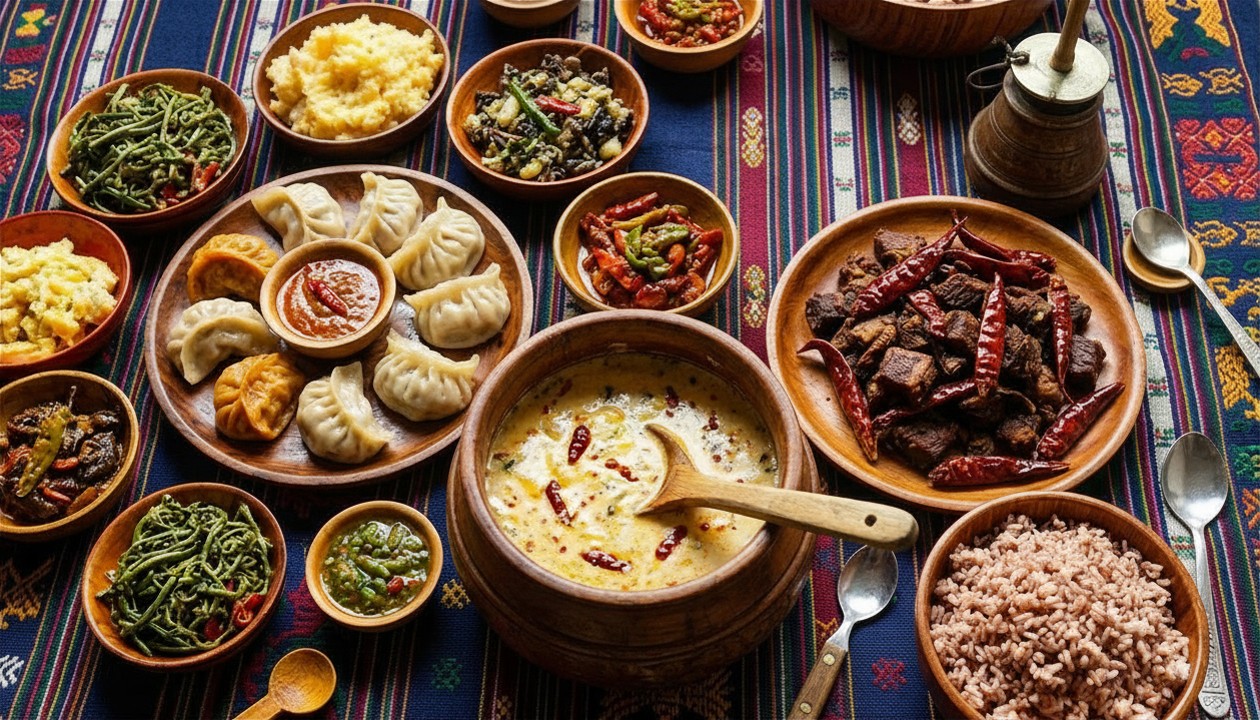
Bhutanese cuisine is bold, comforting, and unlike anything you've tasted before. Rooted in centuries of Himalayan tradition, the food in Bhutan revolves around chili peppers, cheese, red rice, and hearty stews that fuel life at high altitude. For US travelers visiting for the first time, exploring what to eat and drink in Bhutan is one of the trip's greatest pleasures — and surprises. This Bhutan food guide walks you through the must-try dishes, beloved beverages, and practical dining tips so you can savor every meal of your journey.
Iconic Bhutanese Dishes You Must Try
Ema Datshi — The National Dish
No Bhutan food guide is complete without ema datshi. Considered the country's national dish, it's a fiery stew of green or red chili peppers cooked in a rich, melted cheese sauce. Unlike Western dishes where chili is a background note, here the pepper is the star ingredient. It's served at virtually every meal alongside red rice. If you're sensitive to heat, don't worry — most restaurants can prepare a milder version for visitors. We recommend trying it at least once at full strength to get the authentic experience.
Kewa Datshi and Shamu Datshi
The datshi family extends well beyond ema. Kewa datshi swaps the chilies for thinly sliced potatoes, creating a creamy, cheesy comfort food that American palates immediately love. Shamu datshi uses local mushrooms, offering an earthy, umami-rich variation. Both dishes pair beautifully with Bhutan's nutty red rice and make excellent options for those easing into spicier fare.
Momos — Bhutan's Beloved Dumplings
You'll find momos everywhere in Bhutan, from street vendors in Thimphu to family-run restaurants in Paro. These steamed or fried dumplings are typically filled with minced pork, beef, or vegetables and served with a spicy dipping sauce called ezay. They're the perfect snack between sightseeing stops — especially welcome after a morning spent hiking to the iconic Tiger's Nest monastery.
Jasha Maru — Spicy Chicken Stew
Jasha maru is a flavorful chicken stew made with tomatoes, onions, garlic, ginger, and plenty of chilies. It has a lighter, brothier consistency than datshi dishes, and its bright, aromatic flavors make it a favorite among visitors. It's often served with red rice or, occasionally, with hand-pulled wheat noodles.
Phaksha Paa — Pork with Red Chilies
Bhutan's love of pork shines in phaksha paa, strips of pork belly stir-fried or stewed with whole dried red chilies and radishes. The dish is rich and deeply satisfying, combining smoky, spicy, and slightly sweet flavors. If you enjoy bold pork dishes, this will likely become a highlight of your culinary journey.
Red Rice — The Staple Grain
Bhutanese red rice accompanies nearly every meal. Grown in the fertile Paro Valley and other high-altitude paddies, it has a soft, slightly sticky texture and a subtle nutty flavor. It's more nutritious than white rice, packed with minerals and fiber. You'll quickly discover that its earthy taste is the perfect counterpoint to Bhutan's intensely spiced dishes.
What to Drink in Bhutan
Suja — Butter Tea
Suja is Bhutan's traditional butter tea, made by churning tea leaves with yak butter and salt. The result is a warm, savory, slightly creamy beverage that takes most Western visitors by surprise. It's an acquired taste, but suja is deeply woven into Bhutanese hospitality — refusing a cup would be impolite. Give it a few sips, and you may find it grows on you, especially on cold mountain mornings.
Ara — Local Rice Wine
Ara is a traditional alcoholic drink distilled or fermented from rice, wheat, or millet. Its flavor ranges from mild and slightly sweet to potent, depending on who brewed it. In rural homes, you'll often be offered ara as a welcoming gesture. Sip slowly and appreciate the cultural significance — it's a genuine taste of village life.
Local Beer and Other Beverages
Bhutan has a growing craft-beer scene. Brands like Red Panda and Druk 11000 are widely available and pair well with spicy Bhutanese meals. You'll also find excellent local herbal teas, fresh fruit juices, and international soft drinks throughout most hotels and restaurants.
Dining Tips for US Travelers
Bhutanese meals included in your tour package are typically served buffet-style at hotels, offering a mix of local and international options. This is great news for cautious eaters — you can sample Bhutanese specialties alongside more familiar dishes. If you have dietary restrictions or allergies, we recommend mentioning them when you customize your Bhutan itinerary so your guide and hotels can prepare in advance.
Tipping is not expected in Bhutan, but it's appreciated at restaurants for exceptional service. Always drink bottled or purified water, and carry a water bottle during excursions. For more practical advice on navigating your trip, check out our comprehensive Bhutan travel tips page.
Embrace the Culinary Adventure
Eating in Bhutan is far more than sustenance — it's a cultural experience. Every dish tells a story about the land, the seasons, and the people who have cooked this way for generations. Whether you're warming up with a bowl of jasha maru after a mountain hike or sharing a glass of ara in a farmhouse, the food in Bhutan will leave a lasting impression. Come with an open mind, a willing palate, and an appetite for adventure, and Bhutanese cuisine will reward you generously.
Planning a trip to Bhutan? Customize your Bhutan itinerary with Shar Voyage →