Is Bhutan Worth the $100 Daily Fee? A 2026 Traveler's Guide to the Last Shangri-La
Published by Shar Voyage • Updated 2026
Overview
It's the question every US traveler asks before booking a Bhutan trip: is this tiny Himalayan kingdom really worth the $100-per-night Sustainable Development Fee? In a world of budget airlines and hostel-hopping, Bhutan's approach feels almost radical—charge a daily fee, limit mass tourism, and preserve one of the most pristine cultures on Earth. But after helping hundreds of American travelers experience Bhutan firsthand, we can tell you that the answer is a resounding yes. Here's a clear-eyed, honest breakdown of what that fee means in 2026, what it does and doesn't cover, and why travelers consistently call Bhutan the single most meaningful trip of their lives.
What Exactly Is the Sustainable Development Fee?
Bhutan's Sustainable Development Fee, commonly called the SDF, is a nightly levy of $100 USD charged to all international visitors (except citizens of India, Bangladesh, and the Maldives). Introduced in its current form in 2023 after a revision from the earlier $200 rate, the fee is paid directly to the Royal Government of Bhutan before your visa is processed.
What the SDF Funds
This isn't a tourism tax that vanishes into bureaucracy. The SDF directly finances Bhutan's universal free healthcare, free education through university level, carbon-negative environmental programs, and the maintenance of sacred cultural sites like Tiger's Nest. When you pay the fee, you're literally investing in the well-being of an entire nation—and in preserving the very things that make Bhutan extraordinary for future visitors.
What the SDF Does NOT Cover
A common misconception is that the $100 daily fee is all-inclusive. It isn't. Your hotels, meals, licensed guide, internal transport, and monument entry fees are all separate costs. Think of the SDF as a conservation and cultural preservation contribution, while your trip logistics are arranged independently or through a tour operator like Shar Voyage. This is actually good news—it means you have full control over your accommodation and experience level, from comfortable three-star hotels to ultra-luxurious lodges.
Breaking Down the True Cost of a Bhutan Trip in 2026
Let's talk real numbers. Beyond the $100 nightly SDF, here's what US travelers can expect to spend per day in 2026:
Budget-Comfortable Tier
Staying in clean, well-reviewed three-star hotels with a licensed guide and driver, meals at local restaurants, and standard vehicle transport typically runs $150 to $200 per person per day. Combined with the SDF, that puts your all-in daily cost around $250 to $300. For a seven-day trip, you're looking at roughly $1,750 to $2,100 in total ground costs before flights.
Premium and Luxury Tier
Opting for boutique heritage hotels, premium dining experiences, and exclusive excursions raises the daily cost to $300 to $500 beyond the SDF. Luxury properties like Amankora or Six Senses can push the nightly accommodation alone past $1,500. But even at the comfortable tier, the quality of experience in Bhutan punches far above what that dollar amount suggests.
If you'd like a detailed cost estimate tailored to your travel dates and preferences, our team can build a custom Bhutan itinerary with transparent line-item pricing so there are no surprises.
So What Makes Bhutan Worth It?
Price is only meaningful in context. Here's what your money actually buys you in Bhutan—experiences that simply don't exist anywhere else on Earth.
Unmatched Cultural Authenticity
Bhutan never fell under colonial rule. Its traditions aren't reconstructed for tourists—they're living, breathing daily practices. You'll watch monks debate philosophy in 17th-century courtyards, join local families for farmhouse meals of ema datshi and red rice, and witness dzong architecture that hasn't changed in centuries. The limited visitor numbers, made possible by the SDF, mean you'll often have these sacred spaces nearly to yourself.
Pristine Natural Beauty
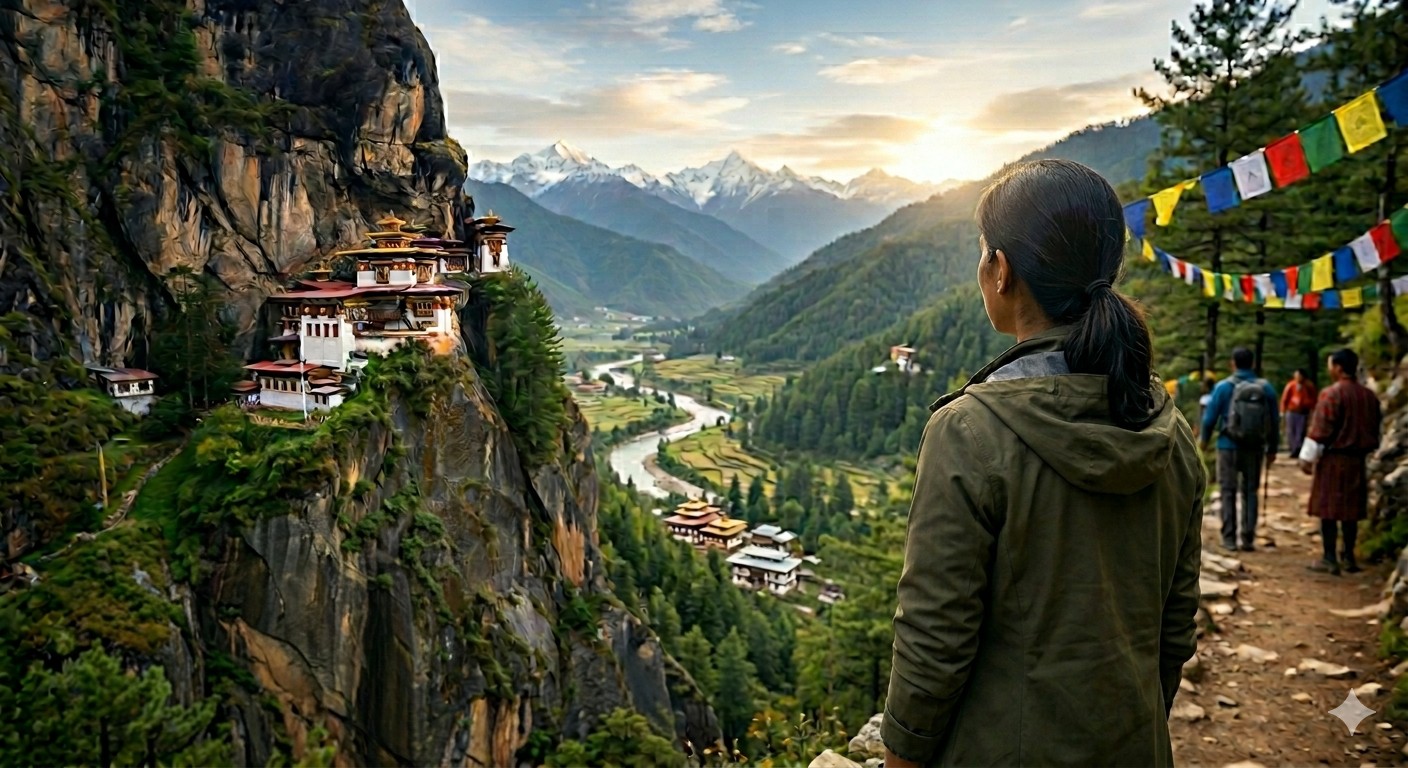
Over 70% of Bhutan remains under forest cover—a constitutional mandate. The kingdom is the world's only carbon-negative country. From the subtropical jungles of the south to the 7,000-meter Himalayan peaks of the north, the biodiversity is staggering. Hiking to Tiger's Nest monastery, crossing high-altitude passes draped in prayer flags, or trekking through rhododendron forests in bloom are moments that redefine what travel can feel like.
A Philosophy You Can Feel
Bhutan famously measures Gross National Happiness over GDP. This isn't a slogan—it's embedded in policy, education, and daily life. Travelers consistently describe a palpable sense of calm, intentionality, and warmth from the Bhutanese people that transforms a vacation into something closer to a personal reset. You don't just visit Bhutan. You slow down, and something shifts.
How to Maximize Your SDF Investment
Since you're paying the nightly fee regardless, smart planning ensures you squeeze every ounce of value from your time in the kingdom.
Time Your Visit Around Festivals
Bhutan's tshechu festivals are explosions of color, masked dance, and spiritual energy. Attending one is a non-negotiable highlight. Check our Bhutan festival calendar to align your 2026 travel dates with events in Paro, Thimphu, or the more remote Bumthang valley for an intimate, crowd-free celebration.
Go Beyond Paro and Thimphu
Most first-timers stick to the western valleys, which are magnificent. But extending your trip to Punakha, Gangtey, or the sacred Bumthang region reveals layers of Bhutan that few outsiders ever see—ancient temples, black-necked crane habitats, and villages where life moves at a centuries-old pace. A few extra SDF nights in central Bhutan are worth far more than the same money spent almost anywhere else in Asia.
Trust a Specialist Operator
Bhutan requires all international tourists to book through a licensed tour operator. Working with a Bhutan-specialist company means your guide knows the hidden trails, the best local restaurants, and the monks who'll invite you in for butter tea. It's the difference between seeing Bhutan and truly experiencing it. You can review our complete process and start your booking here.
The Verdict for 2026
Here's the honest truth: Bhutan is not a budget destination, and it was never meant to be. The $100 daily fee is a deliberate, values-driven choice by a country that refuses to trade its soul for tourist dollars. For US travelers who value authenticity over all-inclusive resorts, who want to feel genuinely changed by a trip rather than simply entertained, Bhutan delivers an experience that no amount of money can replicate elsewhere. The fee doesn't make Bhutan expensive—it makes Bhutan possible. And in 2026, with global tourism increasingly homogenized, that is worth more than ever.
Planning a trip to Bhutan? Customize your Bhutan itinerary with Shar Voyage →